
Transcript
Announcer:
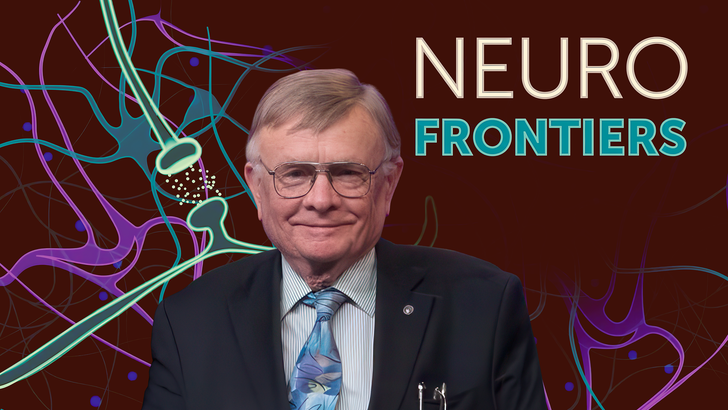
This is NeuroFrontiers on ReachMD. Today, we’ll hear from Dr. Arnie Koeppen, who’s a neurologist at the Albany Stratton VA Medical Center and Professor Emeritus at Albany Medical College in New York. He’ll be sharing his insights on the developmental nature of Friedreich’s ataxia.
Here’s Dr. Koeppen now.
Dr. Koeppen:
Many people think that Friedreich’s ataxia is a neurodegenerative disease. You may have heard that yourself. That implies that in the beginning, the heart, brain, spinal cord, and dorsal root ganglion are normal, and then undergo atrophy. This occurs at the time when people think there is an onset of the disease, which can be calculated to 11 years—early teenage years—as a juvenile disease.
My own thoughts on this and my own research has showed me differently, namely that Friedreich's ataxia begins in utero, because frataxin deficiency's genetic. And the unborn child quite clearly is frataxin deficient, resulting in developmental changes of the brain and the cerebellum.
I maintain that the heart is truly not developmental and patients with Friedreich's have normal hearts in the beginning. But the superimposed secondary effects of Friedreich’s ataxia affect the heart primarily, but also the dentate nucleus and the dorsal root ganglion. So the beginning is hypoplasia or developmental, superimposed at age 11 until the estimated age of 37 or so—it's degenerative and inflammatory, also.
Friedreich knew that certain parts of the anatomy that he studied could not be degenerative but had to be developmental. And that fell by the wayside for the next a hundred some years—150 years. And the disease became the classic spinal cerebella ataxia.
This is a term that's no longer relevant, and I maintain that we need to tell clinicians that the diagnosis at age 11 or so is where genetic testing is delayed, and therapy will therefore be delayed too. Developmental changes will not be addressed by incoming medicines. Developmental changes will make the disease diagnosable by newborn testing and development of medicines to restore and increase frataxin shortly after birth.
Announcer:
That was Dr. Arnie Koeppen discussing how our understanding of Friedreich’s ataxia has evolved. To access this and other episodes in our series, visit NeuroFrontiers on ReachMD.com, where you can Be Part of the Knowledge. Thanks for listening!
